(FY2026 3rd Seminar Report) Academia Clinical Development
From Medical Students to Entrepreneurs: Founding GramEye and Reinventing Gram Staining with AI to Tackle Antimicrobial Resistance
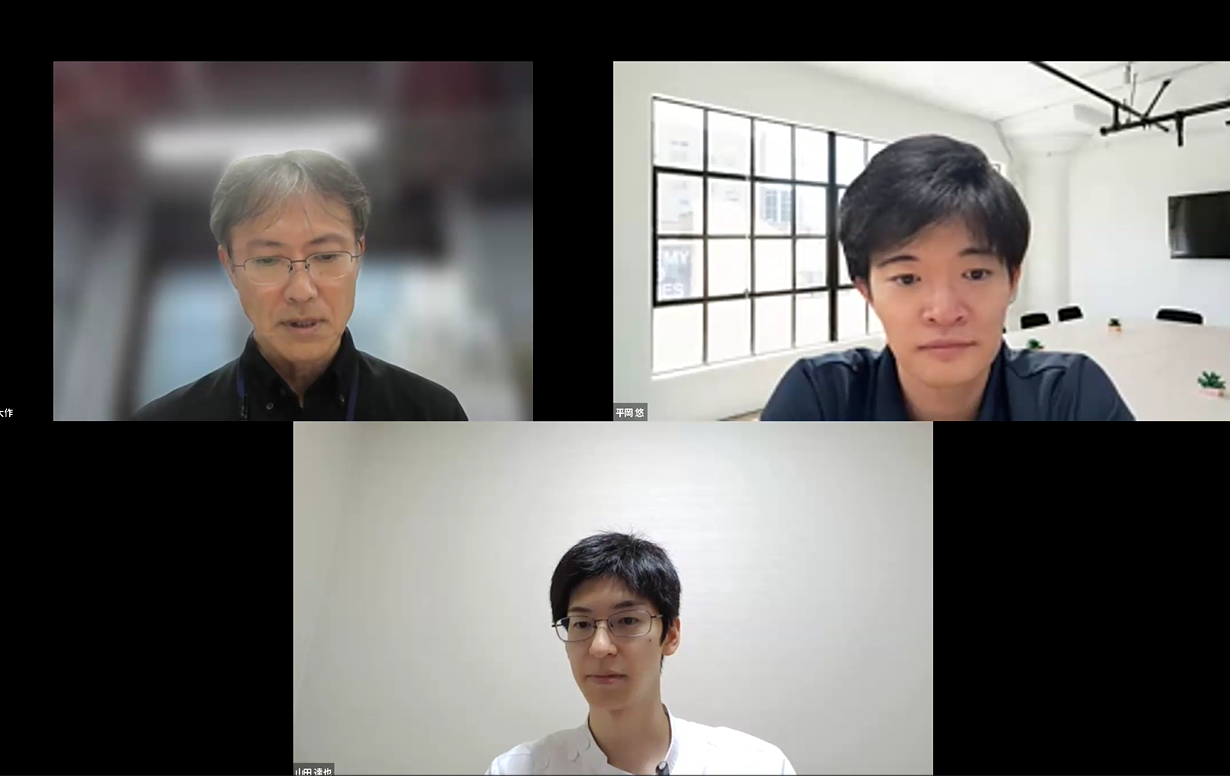
The 3rd Academia Clinical Development Seminar was held online. We welcomed Dr. Tatsuya Yamada and Dr. Yu Hiraoka, co-founders of GramEye Inc., who delivered lectures on the theme of “Entrepreneurship and Social Implementation for Solving Healthcare Challenges.”
In the first session, Dr. Yamada spoke about what inspired him to tackle antimicrobial resistance (AMR), his activities as a student, and the journey that led him to establish GramEye. He explained that AMR is a major global healthcare challenge and is projected to become one of the leading causes of death worldwide in the future. While pursuing solutions to this issue, he participated in several projects during his student years and experienced numerous setbacks related to sustainability and social implementation. Through these experiences, he learned the importance of starting from a clearly identified problem, creating a prototype at an early stage, and maintaining a long-term perspective.
He then introduced the development of GramEye, a company focused on automating Gram staining examinations to support AMR countermeasures. During the early stages of development, the team collected feedback from users using simple sketches and mock-ups while advancing product development through grants and fundraising. He also emphasized the importance of creating and testing ideas even when they are still incomplete, explaining how this approach led to new opportunities and support that ultimately enabled the product to be developed and registered as a medical device.
In the second session, Dr. Hiraoka explained business development and global expansion from the perspective of a co-founder. He described AMR as a global risk comparable to climate change and explained that addressing this challenge requires both effective data visualization and the creation of systems that involve society as a whole. He introduced GramEye’s vision of supporting infectious disease management and appropriate antimicrobial use through the digitalization of bacterial testing.
Dr. Hiraoka also presented the company’s automated Gram staining device, Mycrium, and discussed its implementation and business expansion in Japan and overseas. In addition to expanding adoption within Japan, the company is actively pursuing entry into the U.S. market. Through the digital transformation of microbiological testing, GramEye aims to contribute to global efforts against antimicrobial resistance.
Throughout the seminar, the speakers highlighted that successful healthcare innovation requires not only generating research outcomes but also translating them into solutions that can be effectively used in real-world clinical settings. They also emphasized that entrepreneurship is not an extraordinary career path but rather one of the practical approaches to solving societal challenges, and that collaboration with colleagues, mentors, and supporters is essential for success.
The seminar provided valuable insights for researchers and healthcare professionals interested in the social implementation of research outcomes and the creation of academia-based startups. We look forward to welcoming many participants to our next Academia Clinical Development Seminar.